How To Read A Peptide Purity Test: Hplc, Mass Spectrometry And Coa Analysis For Uk Scientists 2026

Discover our catalog to view confirmed research substances and learn more concerning our screening and quality control procedure. Even minor contaminations can modify results, reduce reproducibility, or present undesirable variables right into a research. Scientists depend on accurate, validated compounds to guarantee their searchings for are both legitimate and constant.
The most rigid grade, including careful HPLC filtration-- occasionally several rounds-- and strenuous QC. Required for measurable researches, architectural biology, in vivo research study models, and any kind of application where even percentages of contamination could affect outcomes. This is the quality where the boost most greatly, because attaining that last 1-- 3% of purity requires disposing of a considerable portion of the manufactured product. A removal peptide missing out on a single residue may still bind to the same receptor, yet with different affinity or selectivity. In concentration-response experiments, Discover more these contaminants can change curves, flatten plateaus, or introduce biphasic behavior that covers real task of the target substance. The isoelectric factor (pI) is an essential parameter for understanding peptide solubility and behavior in numerous atmospheres.
Truncation And Fragmentation Products
- Examining permits researchers to comprehend exactly what's in the vial, validating both identification and top quality.If you've ever before gotten an artificial peptide for a laboratory experiment, you have actually most likely noticed a purity percentage on the certification of analysis-- commonly values like 95%, 98%, or even 99%.Making certain that each batch undertakes correct laboratory testing aids verify the peptide's authenticity and purity, which is essential for both study validity and safety.We can give expert peptide purity resolution services making use of logical reversed-phase HPLC coupled with mass spectrometry.Not every application demands 99% pureness, and purification is a considerable component of peptide manufacturing cost.Products are for in-vitro laboratory research usage just and are not for human intake.
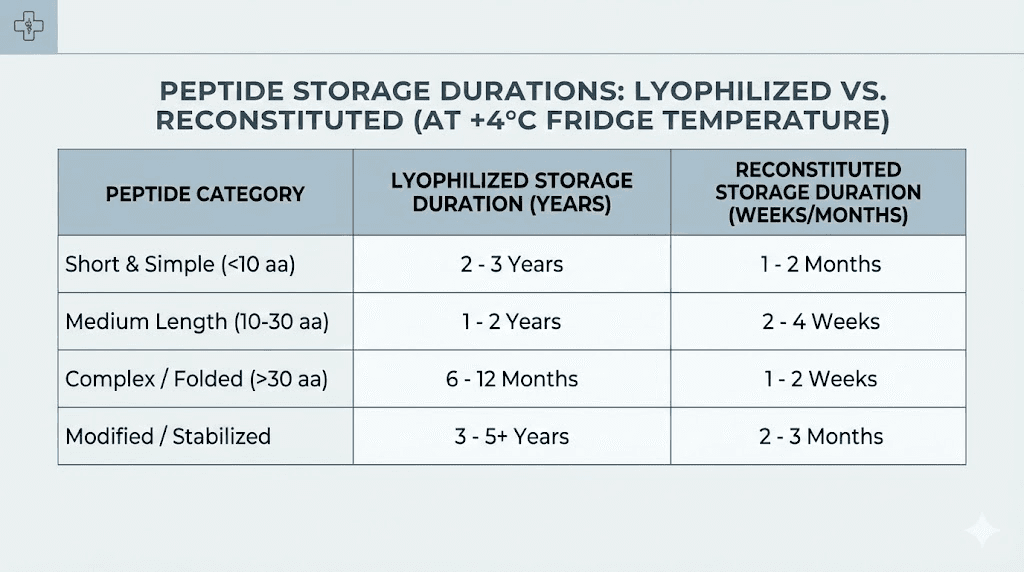
It is one factor proper peptide storage and reconstitution techniques issue. Partial peptide pieces can arise from insufficient synthesis or post-synthesis degradation. These pieces are normally smaller than the target peptide and might elute at various retention times.
Mass Spectrometry (ms): Identification Verification
Straight from the synthesizer with marginal handling-- generally just bosom from the resin and rainfall. Purity ranges commonly, from 40% to 80%+ depending upon sequence size and difficulty. Unrefined peptides appropriate for applications where purity isn't essential, such as antibody production or initial screening assays where the target peptide simply needs to be present, not dominant. Very closely associated with truncations, deletion peptides are unabridged chains that are missing out on one amino acid somewhere in the middle. If topping isn't completely reliable, an uncoupled chain can continue to elongate in subsequent actions, creating a peptide that's only one deposit short of the target.
Assistance
By insisting on peptides that come with verification of pureness and identification, researchers can greatly minimize the threat of experimental artefacts. Conversely, using peptides that have passed third-party laboratory recognition assists make sure that the observed experimental impacts are really due to the desired peptide and not as a result of contaminants or errors. When you see peptides promoted as "research-grade," it describes their planned use and the level of making oversight. Research-grade peptides are created research laboratory study use only-- they are not produced under pharmaceutical GMP requirements and are not meant for usage as therapeutics or in humans. These peptides feature a basic quality assurance bundle, typically including HPLC pureness evaluation and MS confirmation of identity, ensuring they fulfill clinical standards for pureness and composition.
We can supply specialist peptide purity decision solutions utilizing logical reversed-phase HPLC combined with mass spectrometry. Each peptide is rigorously kept an eye on throughout the analytical cycle according to rigorous logical quality assurance and biosynthetic quality assurance standards. HPLC is excellent at addressing the question "how pure is this sample by chromatographic location percent? " It does not, on its own, prove that the major optimal is the desired peptide.